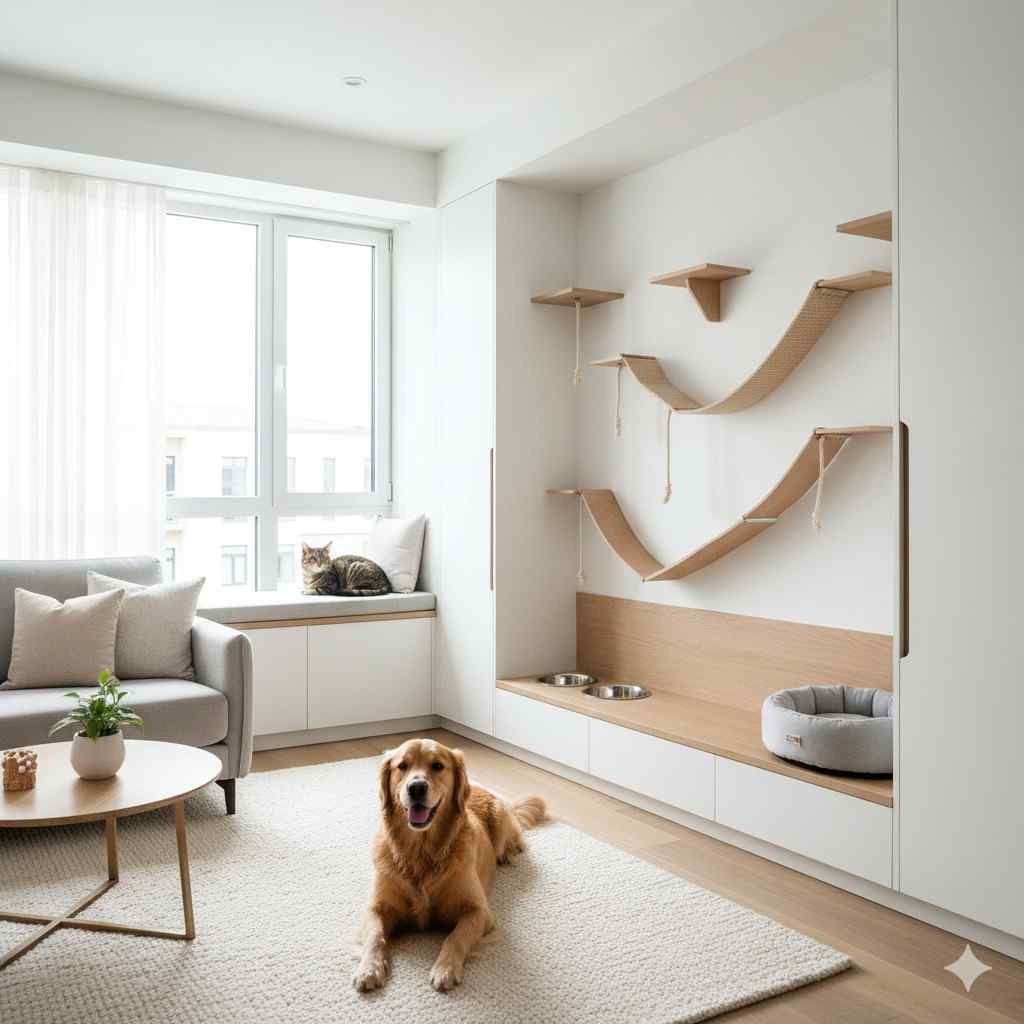
Designing pet-friendly homes requires balancing animal needs with human aesthetics and functionality. Successful pet-friendly design integrates animal requirements seamlessly into living spaces, creating environments where both pets and people thrive. This approach goes beyond basic pet-proofing to consider how design choices affect animal well-being, behavior, and the overall harmony of shared living spaces. Thoughtful design can prevent problems, enhance pet happiness, and maintain beautiful, functional homes.
Understanding Pet Needs in Design
Different pets have different needs: dogs require space for movement and play, cats need vertical spaces and hiding spots, small animals need secure enclosures, and all pets benefit from designated areas for eating, sleeping, and elimination. Understanding your specific pet's needs, behaviors, and preferences informs design decisions that create comfortable, safe environments.
Consider your pet's size, activity level, age, and health when planning spaces. Senior pets may need easier access to favorite spots, while high-energy pets require more space for activity. Design should accommodate not just current needs but potential future changes as pets age or family circumstances evolve.
Flooring and Surface Materials
Durable and Easy-Clean Options
Pet-friendly flooring must withstand claws, accidents, and heavy traffic while remaining easy to clean. Luxury vinyl tile, tile, and certain hardwoods offer durability and cleanability. Avoid materials that scratch easily, trap odors, or are difficult to sanitize. Consider area rugs that can be cleaned or replaced rather than wall-to-wall carpeting in high-traffic pet areas.
Comfort and Safety
Flooring should provide traction to prevent slips and falls, especially for older pets. Some hard surfaces can be slippery for pets with mobility issues. Non-slip rugs, textured surfaces, or area rugs with non-slip backing help provide secure footing. Consider your pet's comfort—some materials stay cooler or warmer, affecting where pets choose to rest.
Furniture Selection and Protection
Pet-Resistant Materials
Choose furniture fabrics that resist pet hair, are easy to clean, and withstand scratching. Microfiber, leather, and certain synthetic fabrics work well. Avoid delicate fabrics, loose weaves, or materials that trap pet hair. Consider furniture with removable, washable covers for easy maintenance.
Strategic Placement
Position furniture to create clear pathways for pets, prevent blocking of favorite windows or views, and provide access to pet beds or resting areas. Consider furniture height—some pets prefer elevated perches, while others need ground-level access. Create spaces where pets can observe household activity without being underfoot.
Dedicated Pet Spaces
Feeding Areas
Designate specific feeding areas that are easy to clean and away from high-traffic zones. Elevated feeders can help larger dogs, while some pets prefer ground-level bowls. Consider built-in feeding stations or dedicated kitchen areas that keep food preparation and pet feeding organized. Ensure easy access to water sources throughout the home.
Sleeping and Rest Areas
Provide multiple comfortable resting spots that accommodate your pet's preferences. Some pets prefer quiet, enclosed spaces, while others want to be in the center of activity. Consider pet beds that complement your decor, built-in window seats for cats, or designated corners for crates or beds. Multiple options allow pets to choose based on their mood and needs.
Play and Exercise Areas
Dedicate space for pet activities: indoor play areas, scratching posts for cats, or exercise equipment for dogs. These areas help prevent pets from using furniture or inappropriate spaces for these behaviors. Designate these areas clearly and make them appealing to encourage use.
Safety Considerations
Pet-Proofing Essentials
Secure potentially dangerous items: electrical cords, toxic plants, small objects that could be swallowed, and cleaning supplies. Use cord management systems, choose pet-safe plants, and store hazardous materials securely. Consider your pet's ability to access cabinets, counters, or other areas where dangers might lurk.
Window and Door Safety
Ensure windows have secure screens, especially for cats who might try to escape or fall. Consider window treatments that allow pets to look outside safely. Door placement and design should prevent accidental escapes while allowing pets to move freely within safe areas.
Vertical Space for Cats
Cats benefit from vertical territory: cat trees, wall-mounted shelves, window perches, or high resting spots. These spaces provide exercise, mental stimulation, and escape routes from other pets or household activity. Integrate vertical elements aesthetically—modern cat furniture and wall-mounted systems can complement contemporary design.
Create pathways that allow cats to move through rooms at different heights, accessing favorite spots without touching the ground. This satisfies natural behaviors while keeping cats engaged and reducing stress.
Storage Solutions
Pet supplies can clutter spaces if not organized properly. Designate storage for food, toys, leashes, grooming supplies, and other pet items. Built-in storage, dedicated cabinets, or attractive containers keep supplies accessible while maintaining tidy spaces. Consider storage near feeding areas, entryways, or pet spaces for convenience.
Outdoor Integration
If you have outdoor space, design it with pets in mind: secure fencing, pet-safe plants, shaded areas, and easy access from indoors. Create paths, play areas, or designated elimination zones. Consider pet doors that allow safe access to enclosed outdoor spaces. Outdoor design should provide enrichment while maintaining safety.
Multi-Pet Considerations
Homes with multiple pets require additional considerations: separate feeding areas to prevent resource guarding, multiple resting spots to avoid competition, and escape routes for pets who need space. Design should accommodate different pets' needs simultaneously while preventing conflicts.
Maintenance and Cleaning
Design with maintenance in mind: choose materials and layouts that simplify cleaning. Consider where accidents might occur and ensure those areas are easy to clean. Have cleaning supplies readily accessible. Regular maintenance prevents odors, damage, and health issues while keeping spaces pleasant for everyone.
Conclusion: Harmonious Coexistence
Pet-friendly design creates homes where animals and humans coexist harmoniously. By understanding pet needs, choosing appropriate materials, creating dedicated spaces, and maintaining safety, you can design beautiful, functional homes that accommodate everyone comfortably.
Successful pet-friendly design doesn't mean sacrificing style or comfort—it means making thoughtful choices that consider all family members, including the four-legged ones. Start with your pet's specific needs, then integrate solutions that work for your lifestyle and aesthetic preferences. The result is a home that truly works for everyone who lives there.