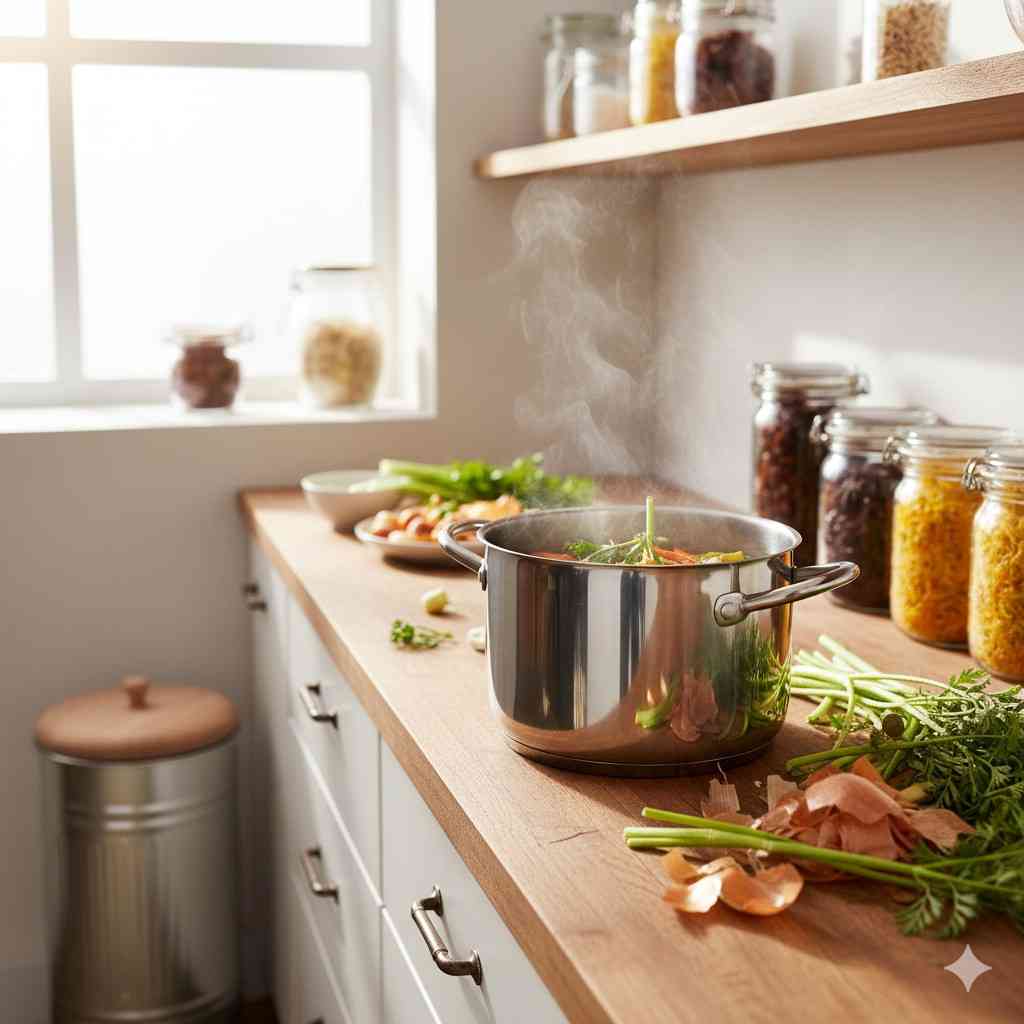
Zero-waste cooking transforms what many consider kitchen scraps into valuable ingredients that add depth, flavor, and nutrition to meals. This approach not only reduces environmental impact and saves money but also elevates your culinary skills by teaching you to extract maximum value from every ingredient. Professional chefs have long understood that the most flavorful components often come from parts we typically discard—vegetable peels, herb stems, bones, and cooking liquids all contain concentrated flavors and nutrients waiting to be unlocked.
The Philosophy of Zero-Waste Cooking
Zero-waste cooking begins with a shift in perspective: viewing every part of an ingredient as potentially useful. This mindset encourages creativity, reduces waste, and often produces more flavorful results than using only the "prime" cuts. The approach requires planning, knowledge of techniques, and willingness to experiment, but the rewards include reduced grocery bills, less environmental impact, and more interesting, complex flavors in your cooking.
This philosophy extends beyond individual ingredients to encompass meal planning, storage strategies, and creative use of leftovers. It's about building a circular system in your kitchen where one meal's scraps become another meal's foundation, where vegetable trimmings become stocks, and where stale bread becomes croutons or breadcrumbs. Every component finds purpose.
Building Flavorful Stocks and Broths
Vegetable Scrap Stock
Save vegetable scraps throughout the week in a freezer bag: onion skins, carrot peels, celery ends, mushroom stems, herb stems, and vegetable trimmings. When you have a full bag, combine with water, a bay leaf, and peppercorns. Simmer for 45-60 minutes, then strain. The result is a rich, flavorful stock that costs nothing and adds depth to soups, risottos, and sauces.
Different scraps contribute different flavors: onion skins add golden color, carrot peels add sweetness, mushroom stems add umami depth, and herb stems add aromatic complexity. Avoid strongly flavored scraps like broccoli stems or bitter greens unless you want those flavors in your stock. Freeze the stock in ice cube trays or containers for easy use.
Bone Broths and Meat Stocks
Save bones from roasted chicken, beef, or fish. Roast them briefly to deepen flavor, then simmer with water, vegetables, and aromatics for several hours. The long, slow cooking extracts collagen, minerals, and rich flavors. Bone broths provide nutrition and depth that can't be matched by store-bought versions, and they cost virtually nothing to make.
Fish heads and frames make excellent stock for seafood dishes. Shrimp shells create a flavorful base for bisques and sauces. Even the liquid from cooking beans or grains can be used as a flavorful cooking liquid. Nothing need go to waste.
Creative Uses for Vegetable Scraps
Peels and Skins
Potato peels, when cleaned and roasted with oil and salt, become crispy chips. Carrot peels can be pickled or added to stocks. Citrus peels, dried and ground, become zest for flavoring. Onion skins add color to stocks and can be used to dye eggs naturally. Apple peels make excellent tea when dried.
Stems and Leaves
Broccoli stems, peeled and sliced, are sweeter and more tender than the florets. Beet greens and carrot tops are delicious sautéed or added to pesto. Radish greens make excellent additions to salads or can be cooked like spinach. Celery leaves add flavor to stocks and can be used as an herb.
Seeds and Cores
Pumpkin and squash seeds, cleaned and roasted, become nutritious snacks. Apple cores, when combined with other fruit scraps, make excellent pectin for jams. Watermelon rinds can be pickled into a refreshing condiment. Nothing is truly waste when viewed through a creative lens.
Transforming Leftovers
Stale Bread
Stale bread becomes croutons, breadcrumbs, bread pudding, or panzanella salad. French toast works beautifully with slightly stale bread. Breadcrumbs can be frozen and used for coating, stuffing, or topping casseroles. Even very stale bread can be turned into breadcrumbs and stored indefinitely.
Cooked Grains and Vegetables
Leftover rice becomes fried rice, rice pudding, or arancini. Cooked vegetables can be blended into soups, added to frittatas, or turned into vegetable pancakes. Mashed potatoes can be formed into patties and pan-fried. Every leftover represents an opportunity for a new dish.
Meat and Protein Leftovers
Leftover roasted chicken becomes chicken salad, soup, or tacos. Cooked meat can be shredded and used in sandwiches, salads, or pasta dishes. Even small amounts can be combined with vegetables and grains to create complete meals. The key is seeing leftovers as ingredients rather than limitations.
Preservation Techniques
Fermentation transforms scraps into valuable preserved foods. Vegetable scraps can be fermented into pickles or kimchi. Fruit scraps can become vinegar. These preservation methods not only reduce waste but create new flavors and nutritional benefits through the fermentation process.
Dehydration extends the life of many ingredients. Herbs, vegetable peels, and fruit scraps can be dried and ground into powders for seasoning. These powders add concentrated flavor to dishes and take up minimal space. They also preserve nutrients and flavors that might otherwise be lost.
Planning for Zero Waste
Successful zero-waste cooking requires planning. When shopping, consider how you'll use every part of each ingredient. Plan meals that use similar base ingredients, allowing scraps to accumulate for stocks. Store scraps properly—freeze vegetable scraps for stocks, keep herb stems in water, and store bones in the freezer until you have enough for broth.
Organize your kitchen to support zero-waste practices. Keep containers for different types of scraps: one for vegetable stock ingredients, one for compost, one for items to preserve. Label and date everything. Create a system that makes it easy to save and use scraps rather than discard them.
Advanced Techniques
As you become more comfortable with zero-waste cooking, explore advanced techniques. Learn to make your own vinegars from fruit scraps, create vegetable powders from peels, or develop complex stocks by combining different types of scraps. Experiment with fermentation to preserve and transform ingredients.
Consider the nutritional benefits: many scraps contain concentrated nutrients. Broccoli stems have more fiber than florets. Carrot tops are rich in vitamins. Fish bones provide calcium. By using these parts, you're not just reducing waste—you're maximizing nutrition.
Economic and Environmental Impact
Zero-waste cooking significantly reduces grocery costs. When you extract maximum value from every ingredient, you need to buy less. Stocks, broths, and preserved foods that would cost money to purchase become free byproducts of your regular cooking. Over time, these savings add up substantially.
Environmentally, reducing food waste has profound impacts. Food waste in landfills produces methane, a potent greenhouse gas. By using scraps creatively, you're reducing your environmental footprint while creating better food. It's a win-win approach that benefits both your wallet and the planet.
Conclusion: A Mindset Shift
Zero-waste cooking represents more than a collection of techniques—it's a fundamental shift in how we view ingredients and approach cooking. By seeing potential in every part of every ingredient, we become more creative cooks, reduce waste, save money, and create more flavorful, interesting meals.
Start small: save vegetable scraps for one week and make a stock. Transform one type of leftover into a new dish. Try one preservation technique. As you experience the results—richer flavors, lower costs, less waste—you'll naturally expand your zero-waste practices. Each technique builds on others, creating a comprehensive system that transforms your relationship with food and cooking.